Albandi, Guimarán, Logrezana, Prendes...
OUR PARISHES
Beyond Candás, the Carreño valleys keep ermitas, churches, mills, bakers and washbasins that tell how they have lived in the parishes of the municipality.
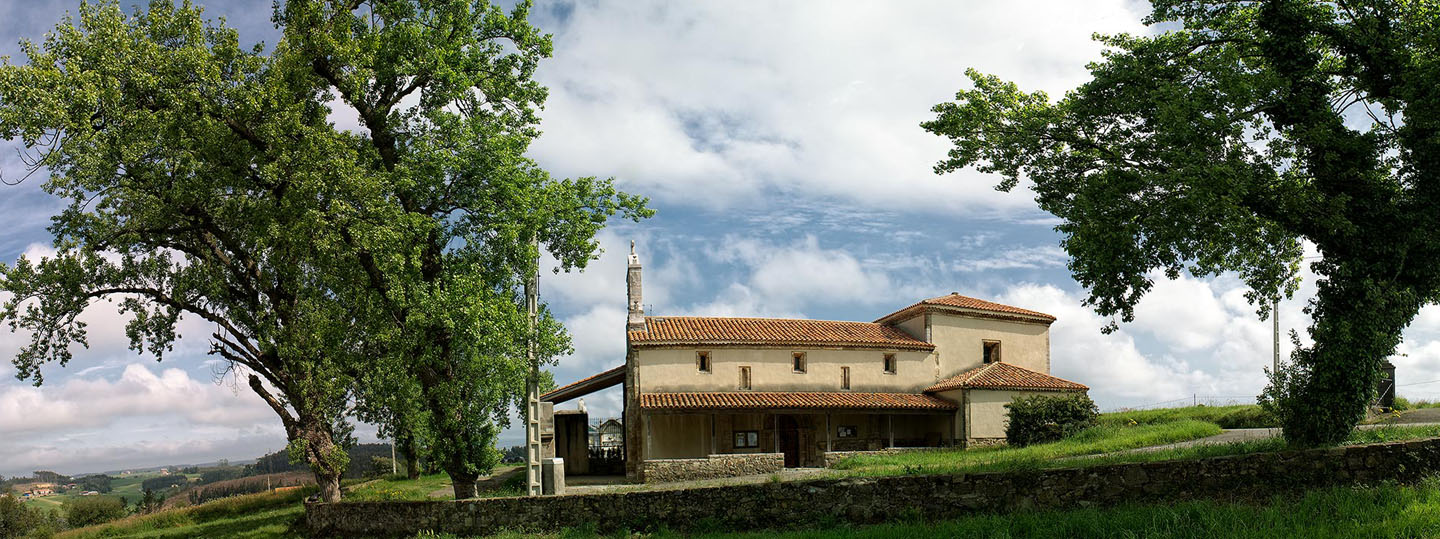
Ermita de Los Remedios
This sanctuary hosts the Virgen de Los Remedios, the patron of the municipality of Carreño. The largest, square base and higher height than the rest of the building, is the oldest part: it dates back to 1620 and is thought to come from the San Pablo chalk in the Mount Rouge. In the 19th century it expanded northwards.
Every year, on the first Sunday after 14 September, the festive day of the Christ of Candás, hundreds of romers meet in the sanctuary to celebrate the Mere Camestre, with the traditional slogan of Ramu.
Church of Santa Eulalia de El Valle
It was owned by the Queen, and Alfonso III El Magno and Queen Jimena donated it to Oviedo Cathedral in 905. It is the Church of El Valle since the parishes were established in the 13th century.
The most historic element of interest is preserved in the Council: a film dated 951, in pizarroa stone, which belonged to the missing ermite of San Pedro and San Pablo, on the Mount Ring. Since 1874 he has been part of the church’s heritage.
Mills
At the beginning of the 20th century, Sopeñes’s molin was the only one in the municipality with its own concession for water. It retains the stone structure that channelled the spring water, which fell into a cascade. Some 300 metres from the Los Remedios ermite in the El Fondo district, the Estanco mill dates from the eighteenth century and stopped grinding around 1950; its machinery is in very good condition.
The Estanco bread and the ‘Carreño style’
The bread is a variant of the Asturian hórreo: rectangular and with six or more heads. The Estanco date back to 1797 and is an example of the ‘Carreño style’: in this municipality, the sizes and paintings of the hórreos and paneras are so vivid and private that they have created style and school. The doors are cut and painted with geometrical motifs and inscriptions.
Fountains and washbasins
There are many sources and washbasins in the valleys. At the source and wash basin of Les Xanes, on the ancient Camino de Santiago along the coast, there is the legend that some xanes were living to care for the clothes laid. In the La Reguera wash basin, with its five stones, the Guimarán washing machines washed the clothes of the wealthy people of Gijón. Ponte Piedra, with a dozen stones under a wooden roof, is one of the most outstanding.
Other footprints of history
- Díaz Caneja Palace (private property): rural Palace of the second half of the 19th century, with U-floor, wooden corridor and chopper. He served as a barracks during the Civil War.
- Calero del Cueto: traditional lime kiln, with a cylindrical well covered with clay.
- Aviation field: the ruins of a bunker and a plaque of the field built in one month, with a track of more than 1.5 km, which was operational until 20 October 1937, remain.
- The Strategic: the route of a railway that never worked. One section has been reclaimed as a green track.
- 5th of Clarin (private property): solar of the García-Alas family, with the 1871 cap, a centuries-old hórreo and the viewer where Leopoldo Alas ‘Clarín’ wrote.
Romanic in Carreño
The municipality keeps an extensive testimony to the Roman architecture.
- Santa María de Piedeloro: 12th century Roman Church, just a few kilometres away from Candás, and one of the best examples of local romantics. From a single house, it does not retain the original bladder. Its western cover, with three decorated arquivolts, stands out. It is a milestone on the clarinian route “Doña Berta”.
- Santa María de Logrezana: it has undergone numerous reforms, but the window of the largest chapel keeps Roman remains from the 12th century, with capitals of animal and plant subjects, as well as the western cover. It is a forced stop at the clarinian ‘Viaje Redondo’.
- San Juan de Pervera: it has several constructive phases. The medieval remains are on the western cover, in a pointed form, with two smooth archivolts and friezes of oversweeping lines and cross blades in the form of lozenges.
- San Félix de Candás: in the San Félix chapel, located behind the altar, medieval architectural and decorative remains attest to the existence of a primitive Roman construction.