Candás, canning house
THE CANNING INDUSTRY
Two centuries of preserved
The port of Candás has been an important part of Cantabrian maritime history since the Middle Ages, when whaling was one of its most emblematic fisheries. One example of its weight is that the prices achieved by fish on its Rula served to set those of other ports.
In the 19th century, the large volume of fishing prompted canning plants to decide to set up here, because the abundance of fish assured them of the raw material. In 1828, the first canning plant in Spain was founded in Gijón, and a few years later the second canning plant was created in Candás. The town became the place chosen by many factories: Germana González (1889), Albo (1895), Herrero (1896) or B. Alfageme (1898).
Around 1920 Italians, looking for cans for their anchovy fillets, introduced this semi-preserved fish and set up several salting workshops. The cellars of Pretto Parodi and Carlo América operated until the middle of the century.
The first half of the 20th century was the boom period: Candás reached 14 fully-fledged factories, employing a large number of women, almost all seamen’s wives and daughters. The relocation of B. Alfageme to Vigo in 1939 marked the beginning of the decline, and the crisis in the fisheries sector in the 1960s led to the closure of many factories.
The permanent exhibition
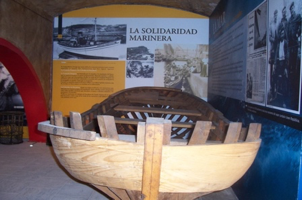
The exhibition “Candás canning industry” depicts the history of canning in the town and pays tribute to all those who participated in it. He occupies the former aljibe of B. Alfageme, which was just below the factory, now missing, and where the water needed to make his famous champagne cider was stored.
The route has eight areas: the marine economy; food preservation techniques (cold, curing, salting and marinating); the birth of canned canned canned food; the world’s first factories; the production process, from cleaning and cooking to packaging; workers and their working conditions; the history of industry in Candás; and their current status and future trends.
For agreed times and visits, consult the Tourist Office: 985 88 48 88.
The Candás canning industry was forged in a collective effort by fishermen, workers, industrialists and professionals at very different levels, who contributed the best of each person and created an industrial power.
The exhibition space “Entre-Latas”
All of these people pay tribute to the ‘Entre-Latas’ exhibition, which showcases the Master Plan for the future Ecomuseo of the Conserva de Asturias, an equipment that will be created in the building of the former Ortiz factory. The ecomuseo is intended to promote and disseminate the fishing and industrial heritage associated with the canning tradition of Asturias and, in particular, of Candás.
It has opted for an ‘ecomuseo’, a typology that highlights the collective cultural heritage associated with its environment. Oral memory, knowledge, industrial heritage, festivals and customs will be part of it next to the objects in the collection.
What will the permanent exhibition count?
- Keep it in photos: photos that bring the work of the fishing industry, the factories and their protagonists closer together.
- Canned factories: videos recreating work in a factory, with a special focus on the Ortiz factory.
- Fisheries and food conservation in Asturias: a journey through preservation methods, from smoking, salting and pickling to canning.
- The canning industries in Candás: the importance this industry gained in the town.
- Work in canneries: the manufacturing process, facilities and distribution of work, where female work was particularly important.
- Crisis and reconversion: the reasons for the canning crisis in Asturias and adaptation initiatives.
- “Canned” lives: interviews with former factory workers and fishermen, who tell their first-person experience.