Port, narrow streets and fishing tradition
CANDÁS, A SEAFARING TOWN
The port
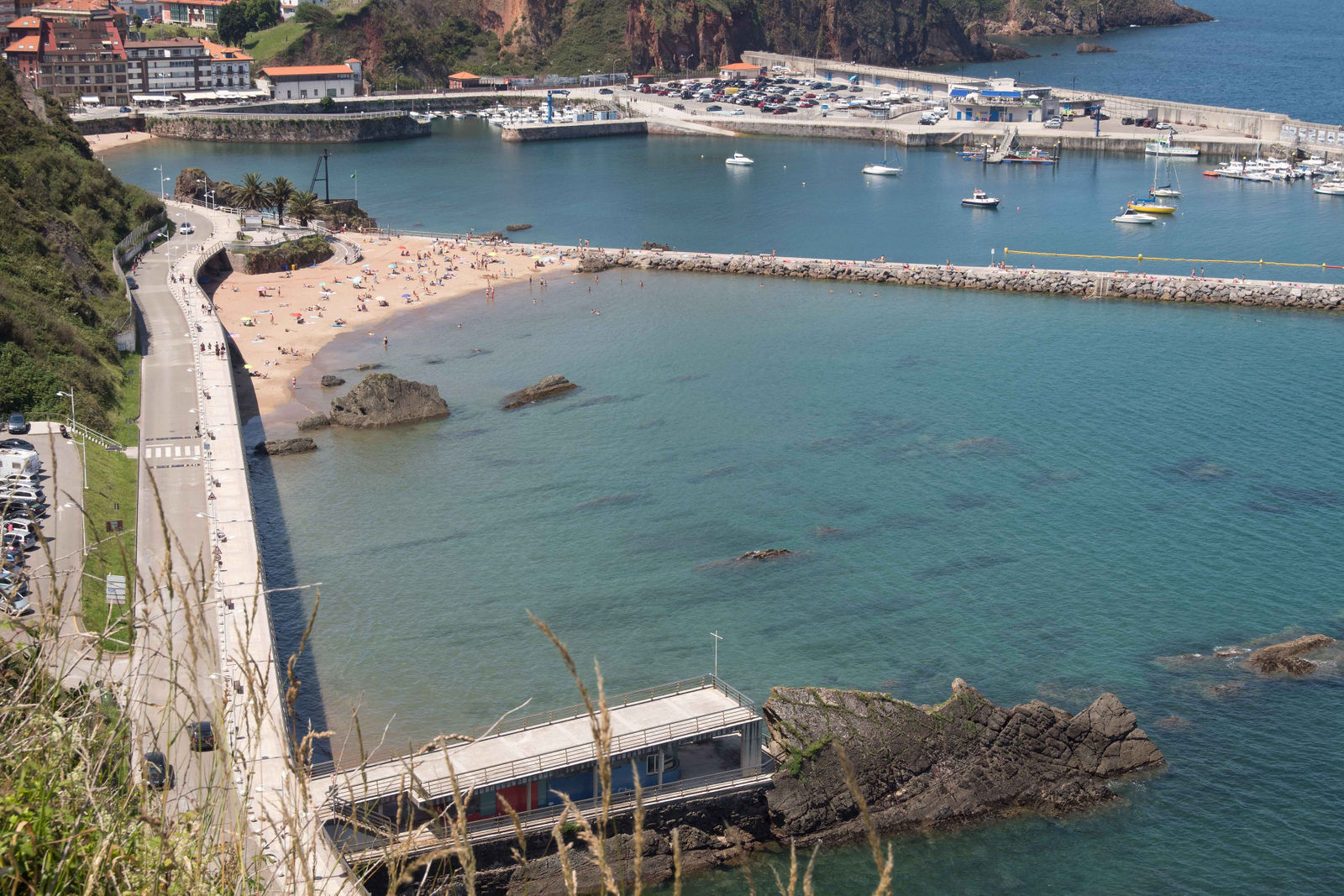
The port of Candás has been the subject of numerous successive works, reconstructions and extensions, mainly since the 18th century. In the early 50s, the dyke widened and, as a result, the currents changed, leaving sand in the dock until it lost depth.
Two stone boats, brought from England after losing their usefulness in the early 30s, can be seen there. One of them, named ‘Greteforce’, was used as a whelk, and the other, ‘Gratefarm’, became part of the dock itself.
In the vicinity of the dock is the statue of ‘La Marinera’, a work of the candastine sculptor Antón Rodríguez García, ‘Antón’, who represents all the fishermen’s women and their uncertainty as to whether they will see the men who gave up at sea alive again.
The basement celebrated bullfighting festivities: with the low tide it was in the form of an improvised bullfighting square. The last seaman’s correction took place on 14 September 1994.
The area known as La Pregona is home to the Peña Furada, a true symbol of Candás: a rock formation in the form of a heel shoe, used in past times for the transport of ore from Monte Fuxa to the port.
Dolphin litigation
A curious anecdote in 1624 is the unusual Pleito de los Delfines, which faced candasinese fishermen with cetaceans. They tried to destroy the fishing gear and decided to take legal action against them. The dolphins were finally sentenced to leave the candasian coasts, and they complied with the decision and disappeared. A monument, the work of sculptor Santarúa, commemorates the event.